Canadian summers are genuinely beautiful, right up until the mosquitoes arrive, the afternoon sun turns your patio into a heat trap, or a sudden downpour sends everyone scrambling inside. If you’ve been putting up with any of that, exterior screens are the upgrade your home has been missing. This guide breaks down the best options available for Canadian homes, what each type does, where it excels, and how to pick the one that actually fits your space and lifestyle.
Why Exterior Screens Outperform Interior Solutions for Canadian Homes
Here’s something most homeowners don’t immediately think about: interior blinds and curtains deal with sun and heat after it’s already inside your home. By the time light hits your curtains, the heat has already transferred through the glass. You’re managing a problem rather than preventing it.
Exterior screens work differently. They intercept sunlight, insects, wind, and rain at the outer surface, before any of it enters your living space. The performance difference is significant, particularly when it comes to solar heat gain and UV protection.
For Canadian homes, that distinction matters even more. The Canadian climate doesn’t give you one challenge to solve, it gives you several at once. Intense summer UV in BC and Alberta. High humidity and mosquito pressure across Ontario and the Prairies.
Coastal wind and salt air on both coasts. Heavy seasonal rainfall in the Pacific Northwest. A quality exterior screen system is engineered to handle all of that while keeping your outdoor living space genuinely comfortable and functional.
Interior solutions simply can’t do that. They can soften the impact of what’s already come through your windows, but they can’t stop it at the source. Weather resistance is a core requirement for any exterior screen worth considering in Canada, and it’s where imported or low-grade products tend to fall short.
The 5 Best Types of Exterior Screens for Canadian Homes
The right screen type depends on your space, your primary challenges, and how you want to use your outdoor areas. Here’s a clear breakdown of each option.
1. Habitat Screens – Best for Complete Patio and Outdoor Enclosures
If you have a patio, sunroom, or pergola that you want to use properly, not just on the handful of perfect days each summer, habitat screens are the most complete solution on the market.
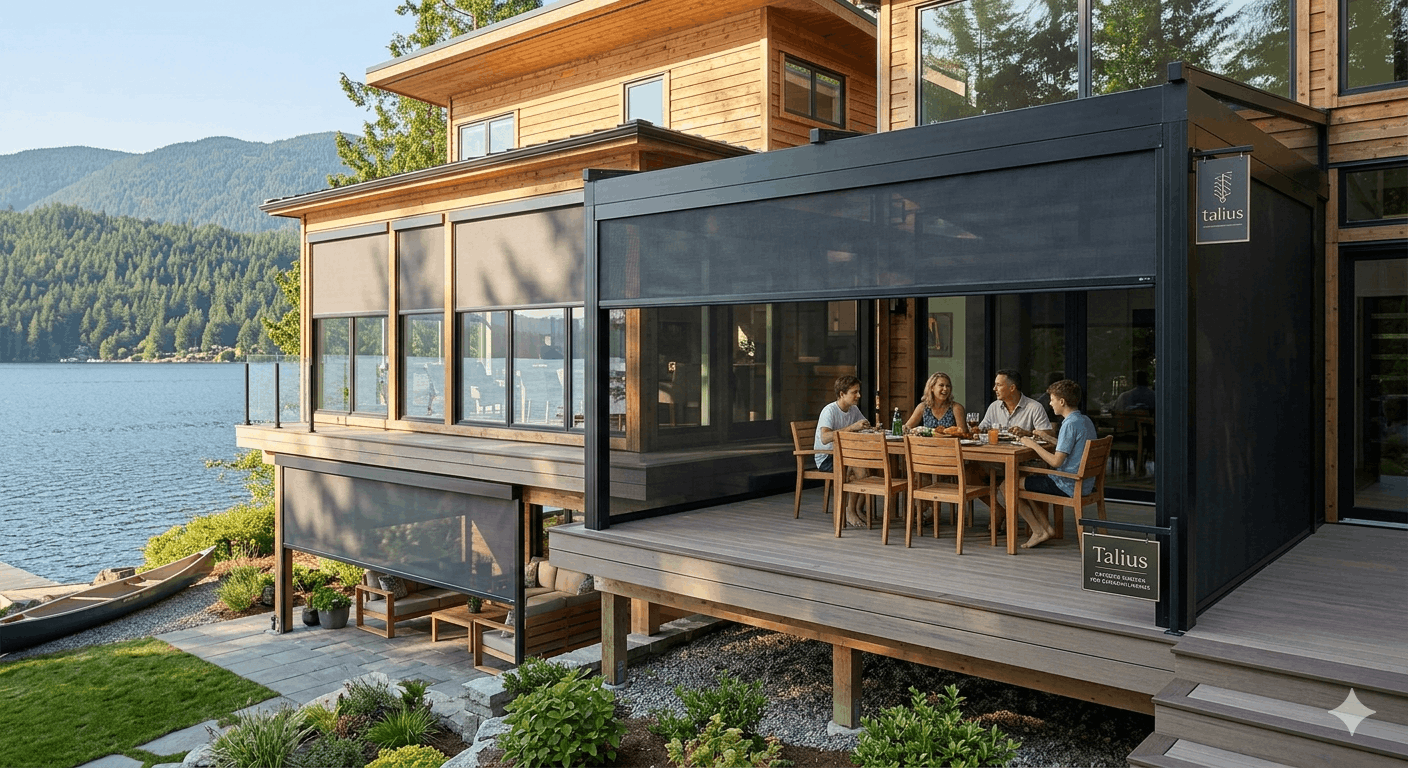
These are automated exterior screens that drop down to fully enclose an outdoor space when needed, then retract cleanly out of sight when conditions are ideal. The result is something that functions like a proper room addition, except without the construction timeline or the five-figure renovation bill.
The benefits stack up quickly. Habitat screens block solar heat gain before it saturates the space, which makes a measurable difference on west and south-facing patios that become oppressively hot by mid-afternoon. They cut sun glare dramatically, and suddenly you can sit outside with a laptop or a book without squinting.
They provide genuine insect control and mosquito protection, which is the difference between using your patio in the evening and abandoning it. And because they enclose the space when deployed, they also offer excellent wind resistance during those unpredictable Canadian summer storms.
Perhaps the most compelling aspect for homeowners thinking long-term: habitat screens create a true three-season living space. Your patio effectively becomes an additional room from spring through late autumn, usable across weather conditions that would otherwise shut it down. That expanded functionality adds real value to the home, both in daily use and in resale appeal.
Talius manufactures its habitat screens with exterior-rated screen fabric engineered for Canadian conditions, and every system is available as a custom screen design built to fit your specific opening, whether that’s a standard sliding door, a wide pergola bay, or a full sunroom wall. Motorized screens with smart home integration are the preferred option for larger spaces, delivering effortless daily use.
2. Solar Screens – Best for Window Heat and Glare Control
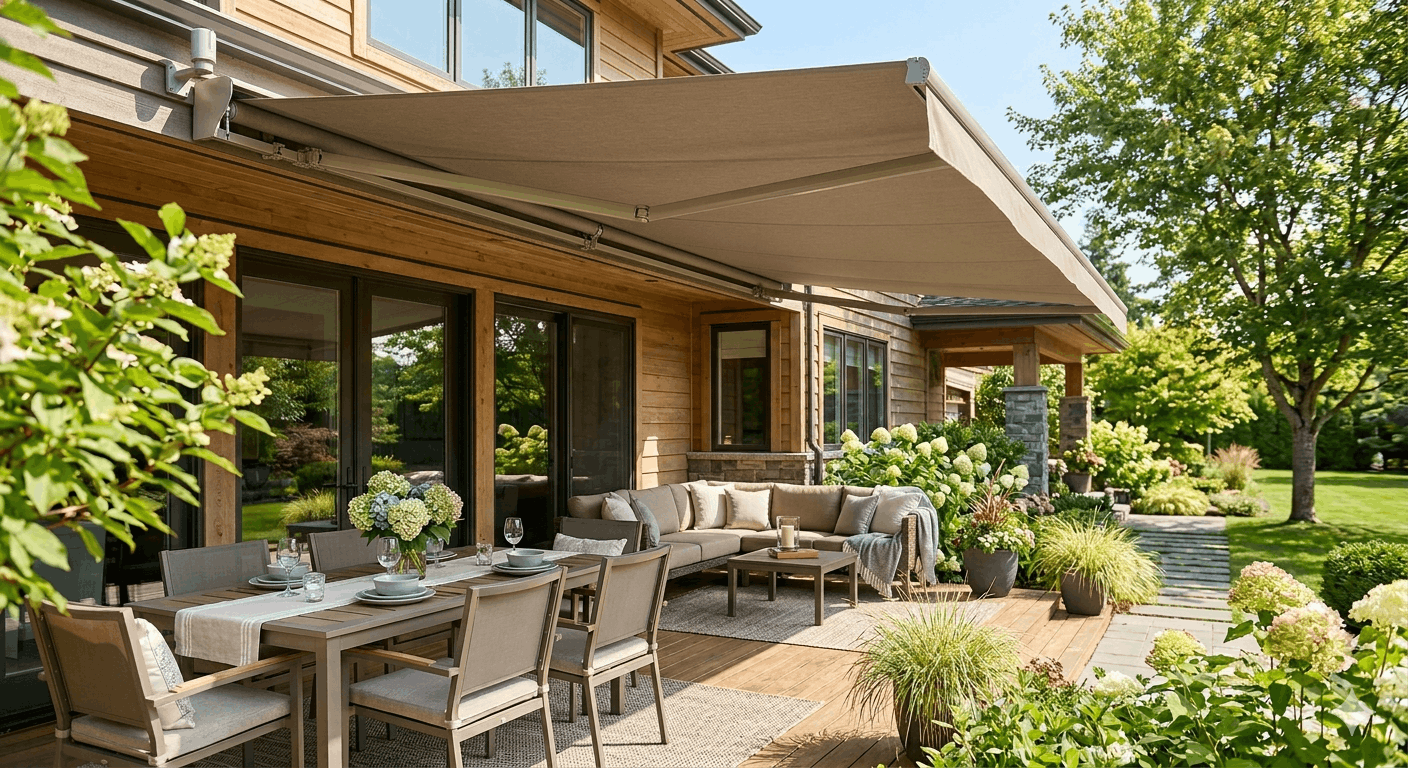
Solar screens take a more targeted approach. Rather than enclosing an entire outdoor space, they’re installed directly over windows and glass openings to reduce solar heat gain and sun glare at the source.
The mechanism is a tightly woven screen fabric / mesh material, a UV-blocking mesh that absorbs and reflects sunlight before it reaches the window glass. High-performance solar screens can reduce heat transmission through windows by up to 65–77% on south and west-facing exposures, which translates directly into lower energy efficiency costs and meaningfully reduced cooling bills through summer.
A common concern homeowners raise is visibility, the worry that blocking sun means blocking the view. With quality solar screens, that trade-off is far less dramatic than people expect. A darker mesh tone (charcoal or dark bronze) provides the best combination,
strong UV protection and heat reduction while maintaining clear outward visibility from inside the home. From the outside during daylight, people can’t easily see in, which also adds a useful layer of privacy protection without any additional installation.
For Canadian homes with large windows, glass-heavy facades, or rooms that overheat in summer, solar screens are one of the most straightforward and cost-effective energy upgrades available.
3. Fly Screens and Insect Screens – The Canadian Summer Essential
Ask any Canadian homeowner to name their single biggest outdoor frustration between June and September, and insects come up more than almost anything else. Fly screens and insect screens exist to solve exactly that, and they do it without chemicals, without ongoing costs, and without sacrificing the fresh air that makes an open window or door worthwhile in the first place.
A fine mesh barrier installed on windows, doors, and outdoor openings maintains full natural ventilation and airflow while physically blocking mosquitoes, flies, wasps, and anything else that would otherwise find its way inside. For families living near lakes, rivers, forested areas, or cottage-country properties, this isn’t a nice-to-have, it’s the difference between comfortable evenings at home and miserable ones.
There’s also an allergen benefit worth mentioning. During spring and early summer, Talius fly screens filter pollen and fine airborne particles through the mesh, which makes a real difference for anyone dealing with seasonal allergies. No medication required, just a screen doing what it’s designed to do.
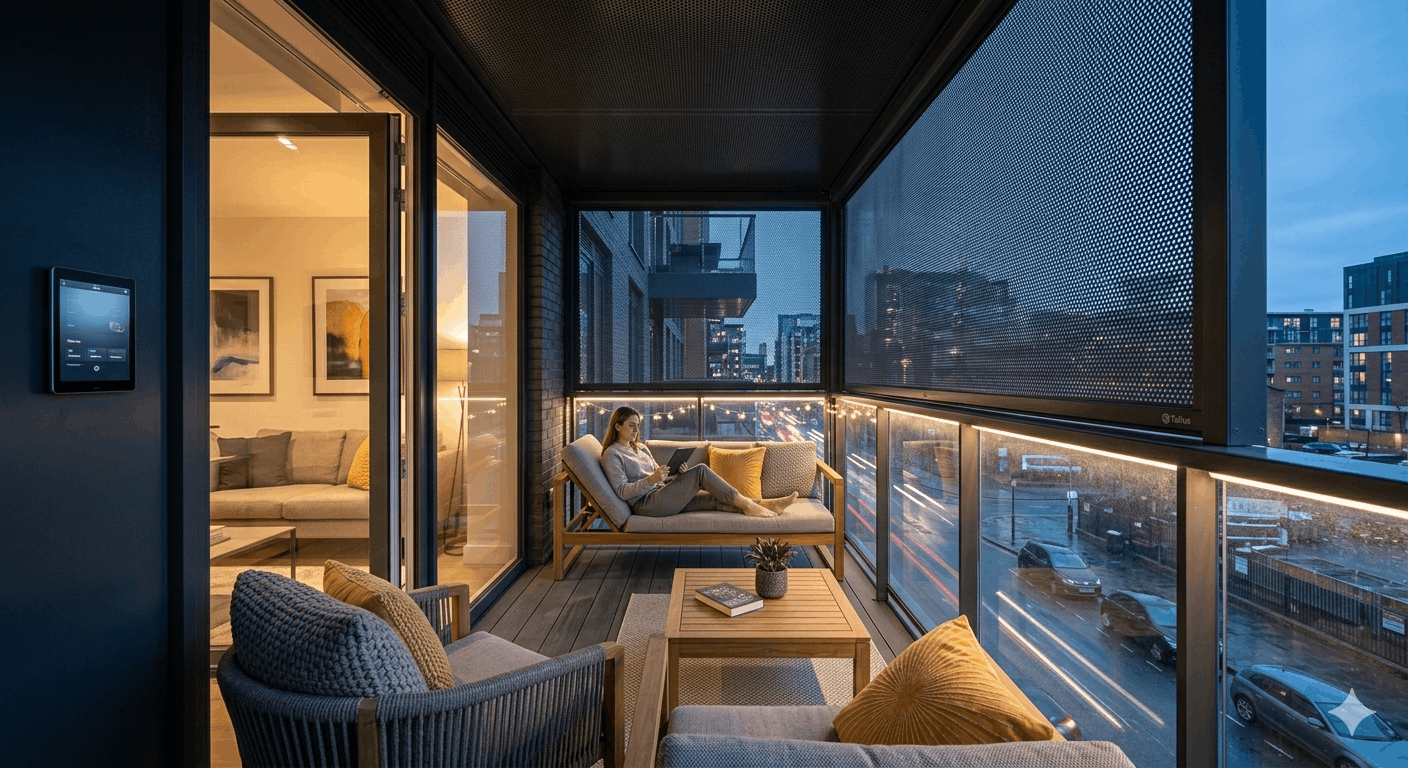
Fly screens integrate naturally into patio, deck, and balcony enclosure setups, working alongside other screen types to create a complete outdoor living environment.
4. Retractable Screens – Best for Flexibility and On-Demand Use
Not every homeowner wants a permanently enclosed outdoor space. Some days you want the full open-air experience, no barriers, just the outdoors. Other days you need shade, insect protection, or shelter from a sudden wind. Retractable screens are built for exactly that kind of flexibility.
They roll or fold away completely into a discreet housing when not in use, completely invisible from outside. When conditions shift and you need protection, they deploy in seconds. That adaptability makes them ideal for the unpredictable nature of the Canadian climate, where a clear morning can turn into an afternoon of wind and rain without much notice.
For deck and balcony enclosures, retractable screens are a popular choice because they let you control how enclosed the space feels on any given day. Combined with pergola or sunroom screening, a retractable system transforms a partially open structure into a fully sheltered retreat during bad weather, then opens back up completely when things clear.
Wind resistance is a key spec to evaluate in retractable designs, look for systems with reinforced side channels that keep the screen taut and secure in higher winds. The choice between manual vs. motorized operation often comes down to the size of the opening: manual systems work well for smaller spans, while motorized is the practical choice for anything wide.
5. Motorized Screens – Best for Large Openings and Smart Home Integration
Motorized screens have become the first choice for homeowners with large outdoor spaces, and it’s not hard to understand why. Manually pulling or cranking a screen across a 12 or 14-foot opening every time the sun shifts or the wind picks up isn’t practical. Motorization makes the system something you actually use every day rather than something you engage with occasionally.
For large patios, commercial outdoor areas, and any opening that goes beyond standard sizing, motorized systems are the sensible default. They integrate with home automation setups, can be programmed to respond to sunlight sensors or temperature readings, and retract automatically when wind resistance thresholds are exceeded, protecting both the screen and the structure.
Custom screen design matters particularly here. Large or non-standard openings need screens built precisely to fit, with no gaps that undermine performance. Talius’s motorized range is engineered for the Canadian climate, built to handle UV exposure, humidity, temperature cycling, and the mechanical demands of daily automated operation without premature wear.
Exterior Screen Comparison: Which Type Is Right for You?
|
Screen Type |
Best Use |
UV Protection |
Insect Control |
Wind Resistance |
Motorized Option |
|
Habitat Screens |
Full patio enclosure |
High |
Yes |
Yes |
Yes |
|
Solar Screens |
Window heat & glare |
High |
No |
Partial |
Yes |
|
Fly Screens |
Insect barrier |
Partial |
Yes |
No |
Some |
|
Retractable Screens |
On-demand flexibility |
High |
Yes |
Yes |
Yes |
|
Motorized Screens |
Large openings |
High |
Yes |
Yes |
Yes |
What to Look for When Buying Exterior Screens for a Canadian Home
Weather resistance should be your first filter. Products not rated for Canadian conditions, UV degradation, moisture cycling, salt air exposure, freeze-thaw stress, will deteriorate faster than the warranty suggests. Stick with exterior-rated fabrics and corrosion-resistant hardware.
Screen fabric and mesh quality determines how well a screen balances heat blocking against outward visibility. A lower openness factor blocks more solar heat gain and provides stronger privacy protection, but reduces the view. A higher openness factor preserves the view but lets more heat through. The right choice depends on your priorities for each specific opening.
Energy efficiency performance is worth quantifying before you buy. Look for products with documented heat reduction data, LEED-compatible products are a reliable signal here. Lower cooling costs over a Canadian summer represent genuine, measurable ROI.
Custom fit is almost always worth the investment over off-the-shelf sizing. Standard dimensions rarely match real homes cleanly. A custom screen design ensures proper coverage with no gaps, which matters for both performance and aesthetics.
Matching the Right Exterior Screen to Your Space
|
Space |
Recommended Screen |
Primary Benefit |
| Open patio | Habitat Screen | Full enclosure – heat, insects, UV |
| Pergola sides | Retractable / Habitat | Flexible or permanent enclosure |
| Sunroom | Solar + Habitat combo | Heat control + full enclosure |
| Deck / Balcony | Retractable / Fly Screen | Flexibility + insect barrier |
| Windows | Solar Screens | Glare, UV, cooling costs |
| Porch | Fly Screen / Retractable | Ventilation + insect protection |
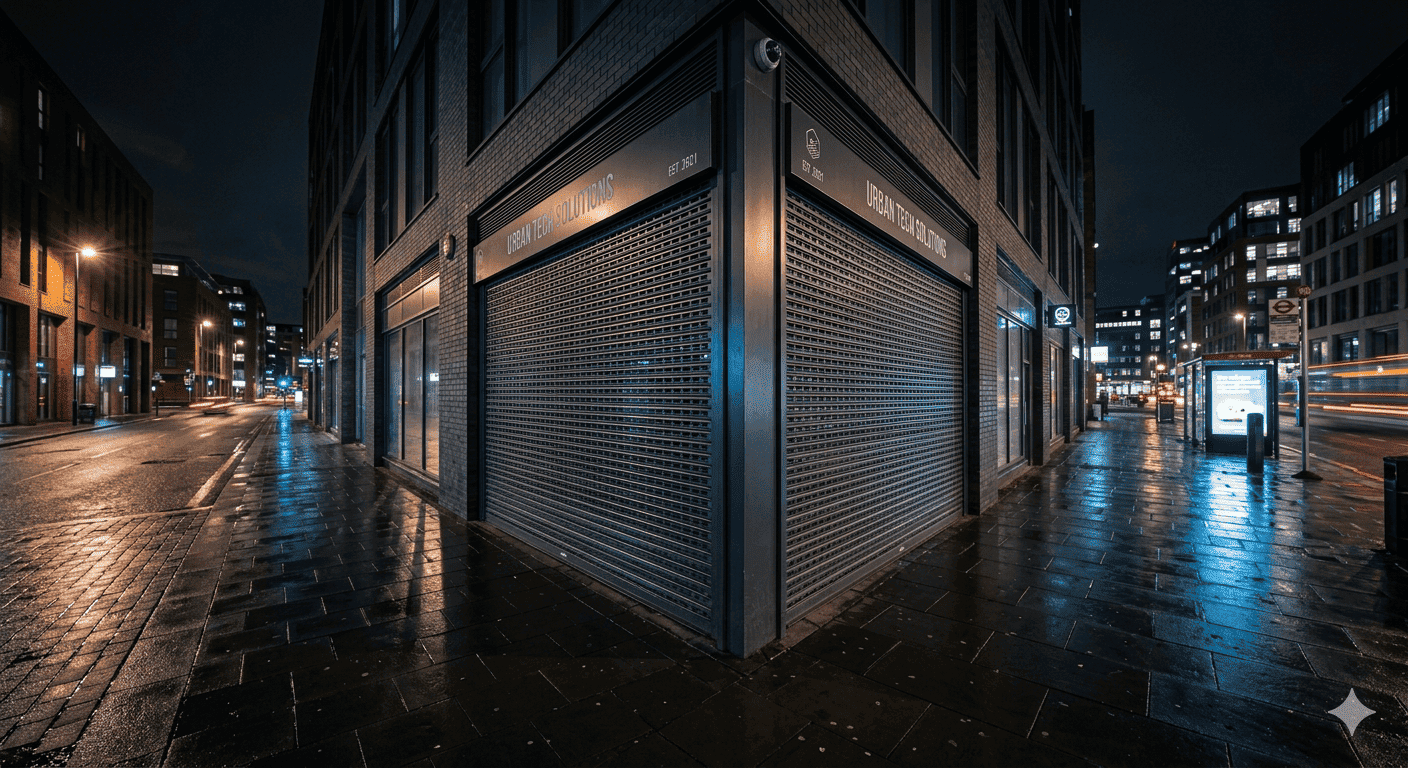
| Large commercial patio | Motorized Screens | Span coverage + automation |
Why Canadian Homeowners Choose Talius for Exterior Screens
Talius has been manufacturing exterior screen and shading solutions in North America for over 40 years. That’s not a marketing line, it’s the foundation of why their products hold up where others don’t. Every system is designed with the Canadian climate in mind.
the UV intensity, the humidity swings, the wind loads, and the temperature cycling that shorter-life products simply aren’t built for.
The full product range covers every scenario in this guide, habitat screens, solar screens, fly screens, retractable screens, and motorized systems, all available in custom screen design configurations for any opening or space. LEED-certified energy efficiency credentials back up the heat reduction claims with documented performance data.
With 100+ authorized dealers across Canada and over 20,000 completed installations, Talius combines manufacturer-grade quality with local professional installation, which matters enormously for long-term performance.
Find the Best Exterior Screen for Your Canadian Home
The right exterior screen comes down to your space, your climate challenges, and how you want to live outdoors. Habitat screens deliver the most complete solution for full patio enclosures. Solar screens are the smart upgrade for heat and glare on windows.
Fly screens are non-negotiable near water and green space. Retractable systems offer day-to-day flexibility. And motorized screens are the only practical choice for large openings. Ready to upgrade your outdoor living space? Explore Talius’s full exterior screen range or get a free quote from an authorized Canadian dealer today.